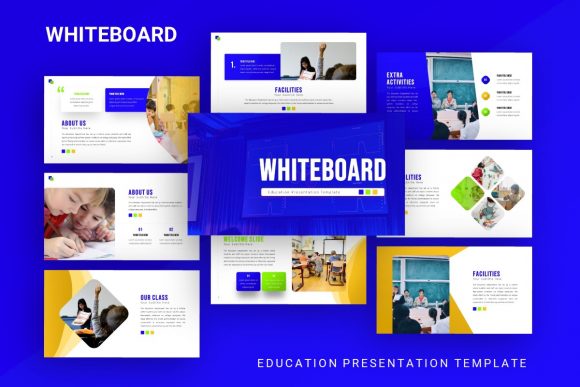
Evaluating the Presentation Template - Whiteboard for Professional Use
In the landscape of digital communication, the aesthetic quality of a slide deck often serves as a proxy for the professionalism of the presenter. For professionals ranging from startup founders to creative directors, finding a balance between visual engagement and structural clarity is a persistent challenge. The Presentation Template - Whiteboard addresses this specific need by offering a versatile framework designed to mimic the organic, explanatory nature of whiteboard sketching while maintaining the polish required for corporate and educational environments. Unlike generic templates that rely heavily on stock photography or rigid corporate grids, this resource focuses on handcrafted illustrations and infographic-driven storytelling.
The value proposition of the Presentation Template - Whiteboard lies in its adaptability. It is engineered to serve a broad spectrum of use cases, including creative agency portfolios, company profiles, pitch decks, and educational lectures. By providing 35 distinct slides based on master layouts, it allows users to construct comprehensive narratives without starting from a blank canvas. However, beyond the feature list, it is important to understand how this template performs in actual workflow scenarios and whether its design philosophy aligns with modern presentation standards.
Design Philosophy and Visual Communication
The core strength of this template is its commitment to visual explanation rather than text-heavy exposition. In an era where audience attention spans are fragmented, the "whiteboard" style leverages cognitive psychology principles; hand-drawn aesthetics can reduce perceived formality and increase engagement by simulating a one-on-one teaching environment. The pixel-perfect illustrations included in the Presentation Template - Whiteboard are not merely decorative. They function as semantic anchors, helping viewers retain complex information through dual coding—processing verbal and visual information simultaneously.
For educators and trainers, this approach is particularly effective. The template transforms abstract concepts into tangible visuals, making it suitable for explaining workflows, organizational structures, or product roadmaps. For business professionals, specifically those in startups or creative agencies, the aesthetic signals innovation and approachability. It avoids the sterile look of traditional corporate decks while remaining clean enough for boardroom presentations. The consistency of the illustration style across all 35 slides ensures that the final output feels like a cohesive brand asset rather than a collection of disparate elements.
Technical Usability and Workflow Efficiency
A beautiful template is useless if it requires advanced graphic design skills to modify. Practical evaluation of the Presentation Template - Whiteboard reveals a focus on user accessibility within the PowerPoint ecosystem. The reliance on Master Slides is a critical technical feature. Rather than formatting individual slides manually, users can apply global changes to fonts, colors, and logo placement across the entire deck instantly. This architecture significantly reduces the time spent on maintenance and allows presenters to focus on content refinement.
The inclusion of editable vector graphics further enhances usability. Raster images lose quality when resized, but the vector-based infographics in this template remain crisp regardless of screen size or projection aspect ratio. Users can recolor icons to match specific brand guidelines directly within PowerPoint without needing external software like Adobe Illustrator. Additionally, the drag-and-drop picture placeholders streamline the process of integrating custom photography or screenshots. This functionality is essential for portfolio presentations where showcasing original work is the primary objective.
- Master Slide Architecture: Ensures global consistency and rapid rebranding capabilities.
- Vector Scalability: Maintains visual fidelity on 4K displays and large format projectors.
- Native Editability: All graphical elements are manipulable within standard PowerPoint tools.
- Placeholder Integration: Simplifies media insertion without breaking layout alignment.
Sector-Specific Applications and Value
The versatility claimed by the Presentation Template - Whiteboard holds up under scrutiny across different professional verticals, though the degree of utility varies by context.
Creative Agencies and Portfolios
For creatives, the template acts as a framing device that complements rather than competes with portfolio pieces. The minimalist whiteboard aesthetic provides high contrast against colorful design work or photography. The 35-slide variety includes layouts specifically suited for case studies, team introductions, and service breakdowns. Freelancers and bloggers can utilize these structures to create media kits or capability statements that stand out in a crowded market.
Startups and Pitch Decks
Investor presentations require a delicate balance of data visualization and narrative flow. The handcrafted infographics in this template are particularly valuable for explaining business models, market sizing, and user journeys. Startups often lack dedicated design teams; having a pre-built library of professional diagrams allows founders to communicate complex value propositions clearly. The informal yet structured vibe can also help differentiate a young company from established competitors using dated corporate templates.
Education and Corporate Training
Educators benefit most from the template’s explanatory focus. Whether teaching a university course or conducting internal corporate training, the ability to visualize processes improves learning outcomes. The template supports modular content delivery, allowing instructors to mix and match slides based on curriculum needs. The documentation file included with the download is a practical addition here, ensuring that non-designers can maximize the tool's potential without extensive trial and error.
Practical Considerations and Limitations
While the Presentation Template - Whiteboard offers significant advantages, prospective users should maintain realistic expectations regarding its scope and constraints. Understanding these limitations prevents frustration during the production phase.
Asset Licensing and Preview Content: A crucial detail noted in the product specifications is that demo images are for preview purposes only and are not included in the downloadable files. Users must have their own image assets ready. This is standard industry practice, but it means the "out-of-the-box" experience will look incomplete until personal content is added. Professionals should budget time for sourcing or creating appropriate imagery to maintain the template's visual standard.
Stylistic Specificity: The whiteboard aesthetic is distinctive, which is both a strength and a constraint. It may not be appropriate for highly formal sectors such as legal defense, heavy manufacturing, or conservative financial reporting where traditional typography and solid blocks of color are expected norms. Users must evaluate whether this illustrative style aligns with their specific audience's expectations before committing to the format.
Content Volume: With 35 slides, the template is robust but finite. Complex annual reports or multi-hour academic lectures may require supplementing these slides with custom designs. While the master slides facilitate this, maintaining stylistic consistency when creating new slides from scratch requires a disciplined eye for design. Users should view this template as a foundation rather than an exhaustive solution for every possible presentation scenario.
Assessing Long-Term Utility and ROI
When evaluating digital assets, cost-per-use is a more meaningful metric than initial price. The Presentation Template - Whiteboard demonstrates strong long-term value due to its modularity. Because it is built on master slides and vectors, it can be repurposed indefinitely for different projects. A marketing manager might use the same base file for a quarterly review, a client pitch, and an internal workshop simply by swapping content and adjusting accent colors.
Furthermore, the template serves as an educational tool for improving presentation literacy. By analyzing how professional designers structure information visually, users can develop better habits in their own custom work. The handcrafted infographics provide examples of how to simplify data, while the layout variations demonstrate effective use of whitespace and hierarchy. For entrepreneurs and freelancers operating without design support, this implicit training adds value beyond the immediate deliverables.
Reliability is another factor in ROI assessment. The .PPTX format ensures compatibility across Windows and macOS environments, reducing technical friction during handoffs or collaborative editing. The inclusion of vector icons eliminates the risk of broken links or missing fonts that often plague downloaded resources. These technical safeguards ensure that the template remains a dependable asset in high-pressure situations where formatting errors are not an option.
Making an Informed Selection
The Presentation Template - Whiteboard represents a thoughtful intersection of artistic expression and functional design. It is best suited for professionals who prioritize clarity, engagement, and visual storytelling over rigid corporate tradition. Its strengths lie in the quality of its vector assets, the efficiency of its master slide system, and its broad applicability across creative, educational, and entrepreneurial contexts.
However, suitability depends entirely on alignment with user goals. Those seeking a quick fix for a formal compliance report may find the style too casual. Conversely, educators, marketers, and creators looking to elevate their visual communication will likely find this template to be a significant productivity multiplier. By understanding both its capabilities and its boundaries, users can leverage this resource to produce presentations that are not only visually appealing but strategically effective. Ultimately, the template is a tool; its success depends on the quality of the content placed within it and the appropriateness of the medium for the intended message.