Evaluating Presentation Template - Dispose for Professional Business Needs
In the landscape of digital communication, the efficiency with which a message is delivered often matters as much as the content itself. For professionals ranging from startup founders to creative directors, the search for a reliable slide deck framework is a recurring task. The Presentation Template - Dispose enters this space not merely as a collection of slides, but as a structured system designed to streamline the creation of business narratives. When evaluating this asset, it becomes clear that its primary value proposition lies in balancing aesthetic flexibility with technical robustness, specifically through its master slide architecture and comprehensive infographic library.
Dispose distinguishes itself by offering a dual-purpose design language. While many templates force users into a specific niche, this template provides enough neutrality to serve corporate reporting while retaining enough stylistic flair for creative portfolios or pitch decks. This versatility is critical for freelancers and agency owners who may need to present a financial overview in the morning and a visual portfolio in the afternoon. The inclusion of 35 unique slides per template variation suggests a depth of content planning that goes beyond standard title-and-bullet layouts, addressing the need for diverse storytelling mechanisms within a single file.
Technical Architecture and Customization Workflow
The practical utility of any PowerPoint asset is defined by how easily it can be modified without breaking the underlying design. Dispose is built on a Master Slide foundation, which is the industry standard for scalable presentation design. This architectural choice means that global changes—such as updating a logo, changing a brand color palette, or adjusting font hierarchies—can be executed across all 35 slides simultaneously. For users managing tight deadlines, this reduces hours of manual formatting to minutes of strategic adjustment.
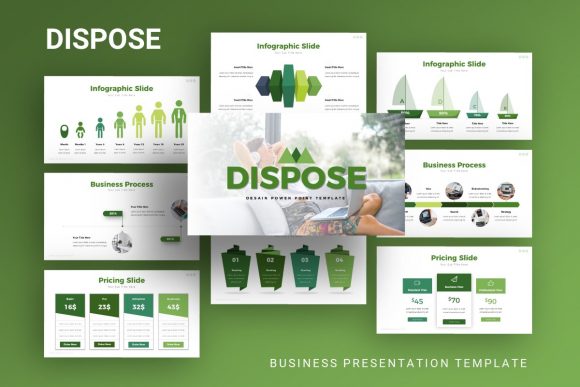
Beyond basic layout management, the template emphasizes "handcrafted infographics." In professional presentations, data visualization is often the weakest link; generic charts can undermine credible research. The vector-based graphics included in Dispose are fully resizable and editable. This ensures that whether a user is projecting onto a 4K conference screen or sharing a PDF via email, the visual fidelity remains sharp. The ability to edit these vectors directly within PowerPoint eliminates the need for external software like Adobe Illustrator, keeping the workflow contained and accessible for team members with varying levels of design proficiency.
The drag-and-drop picture placeholder system further enhances usability. Image masking is a common pain point in slide design, where photos often stretch or distort when replaced. By utilizing predefined placeholders, Dispose enforces aspect ratio consistency, ensuring that user-uploaded photography maintains a professional appearance without requiring manual cropping or alignment adjustments. This feature is particularly valuable for personal portfolios and company profiles where visual consistency establishes trust.
Assessing Versatility Across Use Cases
The stated compatibility with Creative Agencies, Corporate Business, Startups, and Personal Portfolios warrants a closer look at how the design adapts to these distinct environments. A template that claims to do everything risks doing nothing well, so understanding the specific strengths for each audience is necessary.
- Startup Pitch Decks: Investors typically scan decks quickly. The 35-slide structure likely includes essential narrative arcs such as problem/solution, market size, and traction slides. The clean, pixel-perfect illustrations help maintain engagement without distracting from the core metrics. For founders, the value here is having a pre-validated narrative structure that allows them to focus on refining their business case rather than designing slides.
- Creative Agency and Portfolio: Visual-heavy presentations require negative space and strong typography. Dispose’s design appears to prioritize image real estate, making it suitable for showcasing photography or design work. The minimalist aesthetic prevents the template from competing with the portfolio pieces themselves, a common failure point in overly decorative themes.
- Corporate and Business Reporting: Internal communications demand clarity and brand adherence. The master slide functionality supports strict brand guidelines, while the infographic suite aids in translating complex quarterly data into digestible visuals. Reliability is key here; stakeholders need to know the template will not break during collaborative editing sessions.
- Educators and Publishers: For those creating course materials or editorial presentations, the variety of layouts prevents visual fatigue over long lecture series or articles. The documentation file included with the download serves as an onboarding tool, helping non-designers maximize the asset's potential without a steep learning curve.
File Deliverables and Asset Management
When acquiring digital assets, the completeness of the package determines long-term viability. The Presentation Template - Dispose includes the .PPTX file, a documentation guide, and a vector icon set. The inclusion of a dedicated vector icon pack is a significant practical advantage. Icons act as visual anchors in slide design, breaking up text density and guiding viewer attention. Having a cohesive set included ensures that the visual language remains consistent throughout the deck, avoiding the disjointed look that occurs when sourcing icons from multiple free repositories.
It is important to note the disclaimer regarding preview images. As is standard practice, the high-quality photography seen in marketing demos is not included in the source files. Users must have their own image assets ready. While this is expected, it does mean that the "out-of-the-box" experience requires immediate content population. Professionals should view this as a benefit rather than a limitation; it prevents accidental copyright infringement and forces the use of relevant, original imagery that actually supports the specific presentation goals.
Practical Considerations and Limitations
No template is without constraints, and objective evaluation requires acknowledging where Dispose might face friction. First, while the template is customizable, it still operates within the boundaries of PowerPoint. Users accustomed to Figma or Keynote may find certain animation or transition limitations inherent to the .PPTX format. Second, the sheer volume of 35 slides can be overwhelming if not curated. There is a risk of "template bloat," where users include slides simply because they exist in the file rather than because they serve the narrative. Effective use of Dispose requires the discipline to delete unused slides to keep the final deck concise.
Additionally, while the infographics are editable, they are static vectors rather than dynamic data links. Users needing real-time Excel integration for financial modeling will still need to utilize native PowerPoint charting tools alongside the decorative infographic elements. Understanding this distinction prevents frustration when attempting to update data sets. The template excels at *presenting* data visually, but it is not a substitute for spreadsheet functionality.
Determining Fit for Your Workflow
Ultimately, the decision to adopt Presentation Template - Dispose should be based on workflow efficiency and output quality. It is best suited for professionals who value a polished, consistent aesthetic but lack the time to build a design system from scratch. If your current process involves fighting with alignment tools or searching for matching icons, this template solves tangible productivity problems.
For agencies and freelancers billing by the project, the time saved on setup translates directly to margin improvement. For corporate teams, the standardized master slides reduce the QA time required before executive meetings. However, for users seeking highly experimental, avant-garde layouts or complex interactive prototypes, this template may feel too structured. It is a tool for effective business communication, prioritizing clarity and professionalism over artistic novelty.
In assessing the long-term value, the reusability factor is high. Because the design relies on fundamental principles of hierarchy and whitespace rather than trendy effects, Dispose is unlikely to look dated within six months. This makes it a sustainable asset for organizations that produce frequent presentations. When combined with the comprehensive documentation and vector resources, it represents a pragmatic investment in presentation infrastructure. By focusing on the functional aspects of the master slides and infographic systems, users can leverage this template to elevate their communication standards while maintaining the agility required in modern business environments.