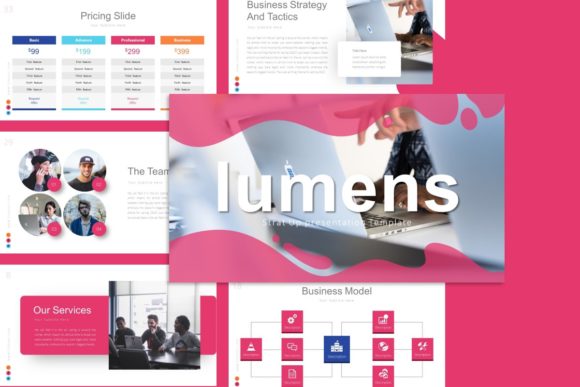
Evaluating the Lumens Strat Up Presentation Template for Professional Use
Selecting the right presentation framework is a critical step in communicating business value, creative vision, or personal branding. The Lumens Strat Up Presentation Template serves as a comprehensive design solution intended to streamline the creation of professional slide decks. Built primarily for PowerPoint, this template offers a structured environment for users ranging from startup founders to creative agencies. When evaluating whether this asset aligns with specific project requirements, it is necessary to look beyond aesthetic appeal and consider functional utility, customization depth, and technical compatibility.
Core Functionality and Design Architecture
The Lumens Strat Up Presentation Template is designed as a multi-purpose toolkit rather than a niche-specific theme. It includes 35 unique slides per template variation, providing a substantial library of layouts without overwhelming the user with excessive redundancy. The architecture relies on Master Slides, which is a significant factor for efficiency. Master Slides allow for global changes across multiple slides; updating a logo, color palette, or font style in the master view propagates those changes throughout the deck. This feature reduces manual formatting errors and ensures visual consistency, which is essential for corporate profiles and pitch decks where brand adherence is mandatory.
The template incorporates handcrafted infographics and pixel-perfect illustrations. Unlike generic templates that rely heavily on stock photography, Lumens emphasizes vector-based graphic elements. These graphics are fully resizable and editable within PowerPoint. For users presenting data-heavy content, such as financial projections for a startup or analytics for a marketing portfolio, the ability to modify chart elements directly without external software like Adobe Illustrator is a practical advantage. The inclusion of drag-and-drop picture placeholders further simplifies the workflow, allowing users to swap preview images with their own assets instantly while maintaining aspect ratios and masking effects.
Versatility Across Different Use Cases
A primary reason professionals evaluate the Lumens Strat Up Presentation Template is its stated versatility. It is marketed for Creative Agencies, Company Profiles, Corporate Business, Portfolios, Photography, Pitch Decks, Startups, and Personal Portfolios. Understanding how it performs in each context helps determine fit.
- Startup Pitch Decks: The template provides structured layouts for problem-solution narratives, market sizing, and team introductions. The clean aesthetic prevents design clutter from distracting investors from the core business proposition.
- Creative and Photography Portfolios: While primarily a business tool, the grid systems and image-focused slides support visual storytelling. However, photographers should note that the layout is optimized for mixed media (text plus image) rather than full-bleed gallery displays common in dedicated photography themes.
- Corporate Reporting: The infographic capabilities make it suitable for quarterly reviews and internal strategy meetings. The professional tone of the default styling aligns with corporate governance standards.
- Personal Branding: Freelancers and consultants can utilize the resume and skill-set slides to create digital CVs that stand out against standard document formats.
Benefits and Practical Advantages
The decision to adopt Lumens often hinges on time efficiency and cost-effectiveness. Creating 35 distinct, cohesive slide masters from scratch requires dozens of hours of design labor. This template compresses that timeline significantly. The documentation file included with the download serves as a technical guide, reducing the learning curve associated with complex master slide hierarchies.
Furthermore, the vector icon set included adds value by eliminating the need to source third-party iconography. Consistency in icon weight and style is frequently overlooked in ad-hoc presentation design but contributes significantly to perceived professionalism. Because all graphics are editable vectors, users can recolor icons to match specific brand guidelines without losing resolution, ensuring the presentation looks sharp on both standard monitors and high-definition projection systems.
Tradeoffs and Considerations
Despite its strengths, the Lumens Strat Up Presentation Template presents tradeoffs that must be weighed during evaluation. A critical consideration is licensing and asset inclusion. The product description explicitly states that demo images are for preview purposes only and are not included in the final files. Users must budget time and potentially additional funds to source high-quality stock photography or prepare their own imagery. A template can look exceptional in a preview but appear incomplete if replaced with low-resolution or stylistically mismatched user content.
Additionally, while the template is "easy customizable," it assumes a baseline proficiency in PowerPoint. Users unfamiliar with editing Master Slides or manipulating vector shapes may find the initial setup challenging. Unlike drag-and-drop web builders, PowerPoint requires manual adjustment of layers and grouping. If a team lacks intermediate presentation design skills, the time saved by using a template may be negated by the troubleshooting required to customize it correctly.
Platform compatibility is another factor. While provided as a .PPTX file, rendering can vary between Microsoft Office versions and alternative suites like Keynote or Google Slides. Complex animations, custom fonts, and vector edits may shift or break when converted. Evaluators intending to present in non-PowerPoint environments should test the file extensively before committing.
Situational Fit: When to Choose Lumens
The Lumens Strat Up Presentation Template is a strong fit for organizations and individuals who require a polished, professional foundation and possess the internal capability to customize it. It is particularly valuable for:
- Early-stage startups needing investor-ready materials quickly without hiring a dedicated designer.
- Agencies managing multiple client accounts that need distinct yet structurally consistent reporting decks.
- Business professionals who frequently update recurring presentations and benefit from master slide automation.
- Users prioritizing data visualization who need editable charts over static images.
In these scenarios, the balance of structure and flexibility supports rapid iteration while maintaining high design standards.
When to Consider Alternatives
Conversely, there are situations where alternatives may better serve the user’s goals. If the primary objective is a highly artistic, avant-garde portfolio with unconventional navigation or interactive elements, a web-based platform or specialized InDesign template may offer more creative freedom than a PowerPoint-centric tool. Similarly, teams deeply integrated into the Figma or Canva ecosystems might find cross-platform friction frustrating; staying within their native ecosystem could yield better collaboration results despite having fewer pre-built business slides.
For users requiring zero learning curve, simpler templates with fewer master slide dependencies might be preferable, even if they offer less long-term scalability. Finally, if the presentation requires extensive video integration or complex motion graphics, Lumens’ static-infographic focus may be limiting, necessitating a template specifically engineered for multimedia playback.
Making the Final Decision
Evaluating the Lumens Strat Up Presentation Template requires matching its feature set against specific operational needs. It excels as a versatile, business-first design system that accelerates production for standard professional use cases. Its reliance on master slides and vector graphics offers longevity and adaptability for growing businesses. However, success depends on the user's willingness to source original imagery and their technical comfort with PowerPoint’s advanced features. By assessing these factors objectively, stakeholders can determine if Lumens provides the necessary infrastructure for their communication goals or if a different solution warrants exploration.