Enhancing Educational Design with the Cute Kids Boy Student Reading Book Vector Illustration
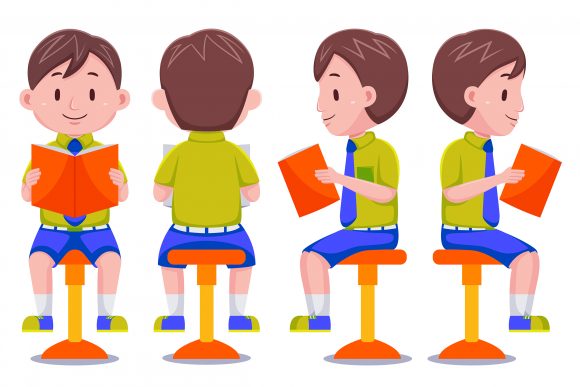
In the rapidly evolving world of digital design and educational publishing, visual communication is just as critical as the written word. Whether you are creating a children’s book, designing a school brochure, or building a landing page for an e-learning platform, the imagery you choose sets the tone for your entire project. One specific asset that has gained significant traction among designers and educators alike is the "Cute Kids Boy Student Reading Book While Sitting 01" illustration. This vector-based graphic represents more than just a decorative element; it serves as a versatile foundation for countless creative variations across print and digital media.
Understanding the technical and aesthetic value of this specific illustration type helps creators maximize their return on investment while maintaining high standards of visual quality. By exploring the purpose, significance, and practical applications of this flat design vector asset, we can better appreciate how modern tools streamline the creative process for both beginners and experienced professionals.
The Significance of Flat Design in Modern Education
Before diving into the specific utility of the reading boy illustration, it is essential to understand why flat design dominates the current landscape of educational and commercial art. Flat design strips away unnecessary textures, shadows, and gradients, focusing instead on clean lines, bold colors, and simple shapes. This style is not merely a trend; it is a functional choice rooted in cognitive psychology and user experience.
For young audiences, particularly in early childhood education, complex realism can sometimes be distracting. A flat design illustration of a student reading provides immediate visual clarity. The child recognizes the action—reading—without processing extraneous background noise. Furthermore, from a technical standpoint, flat design is inherently scalable. Because these illustrations rely on geometric precision rather than pixel density, they maintain perfect integrity whether displayed on a small mobile app icon or blown up for a large-format poster print.
Why Vector Format Matters for Versatility
The core strength of the "Cute Kids Boy Student Reading Book While Sitting 01" asset lies in its file format. Unlike raster images (such as standard photographs) which lose quality when enlarged, vector illustrations are mathematically defined. This distinction is crucial for designers who need flexibility.
- Infinite Scalability: With a base size of 4000 x 6000 pixels, this illustration is already high resolution. However, because it is vector-based, it can be resized to billboard dimensions without a single pixel of distortion.
- Color Customization: Brand consistency is vital for schools and publishers. Vectors allow you to change the color of every individual shape instantly. If your brand guidelines require a specific shade of teal instead of the original blue, this adjustment takes seconds in Adobe Illustrator.
- Element Separation: Every part of the illustration—the book, the clothing, the hair, the chair—is likely on its own layer. This modularity allows designers to combine different elements to create entirely new scenes without starting from scratch.
Practical Applications Across Industries
The versatility of this illustration extends far beyond a single use case. Its neutral yet engaging aesthetic makes it suitable for a wide array of projects in education, marketing, and publishing. Understanding these applications helps justify the acquisition of comprehensive vector packs containing 100+ variations.
Children’s Books and Educational Materials
Consistency is the hallmark of professional children's literature. When illustrating a series of books or a workbook, maintaining the same character style throughout creates a cohesive narrative experience. Using a unified vector pack ensures that the "reading boy" looks identical on page 5 as he does on page 50. This visual continuity aids in character recognition and keeps young readers engaged. Additionally, the ability to edit expressions or poses within the same style guide allows authors to convey different emotions while keeping the art direction uniform.
School Promotion and Marketing Collateral
Educational institutions constantly produce flyers, brochures, and posters to attract new students or inform parents. Generic stock photography often feels impersonal or outdated. A custom-colored vector illustration that matches the school’s mascot colors or branding palette feels intentional and modern. For example, a flyer promoting a summer reading program becomes significantly more effective when the featured illustration reflects the diversity and vibrancy of the student body, all achievable through easy customization of vector assets.
Digital Landing Pages and Infographics
In the digital realm, load times and responsiveness are paramount. Vector graphics, often exported as SVGs for web use, have incredibly small file sizes compared to high-resolution photos. This contributes to faster page loads and better SEO performance. For infographics explaining literacy statistics or study tips, the clean lines of flat design integrate seamlessly with charts and typography, ensuring the data remains the focal point while the illustration adds human context.
Technical Specifications and Workflow Integration
For designers integrating this asset into their workflow, understanding the deliverables is key to efficient production. The "Cute Kids Boy Student Reading Book While Sitting 01" package typically includes multiple file formats to ensure compatibility across different software ecosystems.
- AI (Adobe Illustrator): The native source file. This is where deep editing occurs, including reshaping paths, adding new elements, or restructuring layers.
- EPS (Encapsulated PostScript): A universal vector format compatible with CorelDRAW, Affinity Designer, and older versions of Illustrator. It ensures you are never locked into a single software vendor.
- PDF: Ideal for print-ready outputs and quick previews. Many modern design tools can import PDF vectors directly, making this a lightweight alternative to EPS.
- JPG: A high-quality raster export (4000 x 6000 px) for immediate use in documents or presentations where vector editing is not required.
This multi-format approach democratizes design. A professional illustrator might work in the AI file to create a custom scene, while a teacher making a classroom newsletter might simply drag and drop the pre-rendered JPG. Both users benefit from the same underlying asset.
Common Misunderstandings About Stock Vectors
Despite the clear advantages, some creators hesitate to use pre-made vector assets due to misconceptions about originality and quality. It is important to address these assumptions to build a broader understanding of modern design workflows.
Misconception: Using stock vectors results in generic, unoriginal work.
Reality: Originality comes from composition, color grading, and context, not just raw line work. By combining elements from a 100-illustration pack, changing color schemes to match a unique brand, and integrating the character into a custom layout, the final result becomes distinct. The vector asset is a tool, much like a font or a paintbrush; the creativity lies in how it is applied.
Misconception: Vector files are too difficult for beginners to edit.
Reality: Modern flat design vectors are intentionally structured for ease of use. Layers are typically named and organized logically. Changing a shirt color requires only selecting the shape and picking a new swatch. Tutorials and community resources make learning basic vector manipulation accessible to non-professionals, empowering educators and small business owners to handle their own design needs.
Building a Sustainable Creative Library
Investing in a comprehensive collection like the "Cute Kids Boy Student Reading Book While Sitting 01" set is an exercise in building a sustainable creative library. Rather than commissioning a new illustration for every single project, designers can curate a personal repository of assets that grow in value over time. As trends shift, the ability to recolor and restyle existing vectors means your library never truly becomes obsolete.
Furthermore, having a consistent set of 100 vector illustrations allows for rapid prototyping. When pitching a new children’s book concept or a school curriculum redesign, being able to mock up high-fidelity visuals in hours rather than days can be the difference between approval and rejection. The efficiency gained translates directly to more time spent on strategy, content development, and refinement.
Conclusion: Empowering Creativity Through Quality Assets
The "Cute Kids Boy Student Reading Book While Sitting 01" illustration exemplifies the intersection of artistic charm and technical utility. It addresses the specific needs of modern creators who demand high resolution, editability, and cross-platform compatibility. From fostering literacy in children’s books to enhancing the professionalism of educational marketing, this asset type serves as a foundational building block for visual storytelling.
By understanding the ground-up mechanics of flat design, the importance of vector scalability, and the practical workflows associated with AI, EPS, and PDF files, users can unlock the full potential of their design purchases. Whether you are a seasoned illustrator looking to speed up your workflow or an educator creating engaging materials for your students, these tools provide the flexibility needed to bring your vision to life. Happy designing and happy purchasing await those who embrace the power of customizable vector art.